
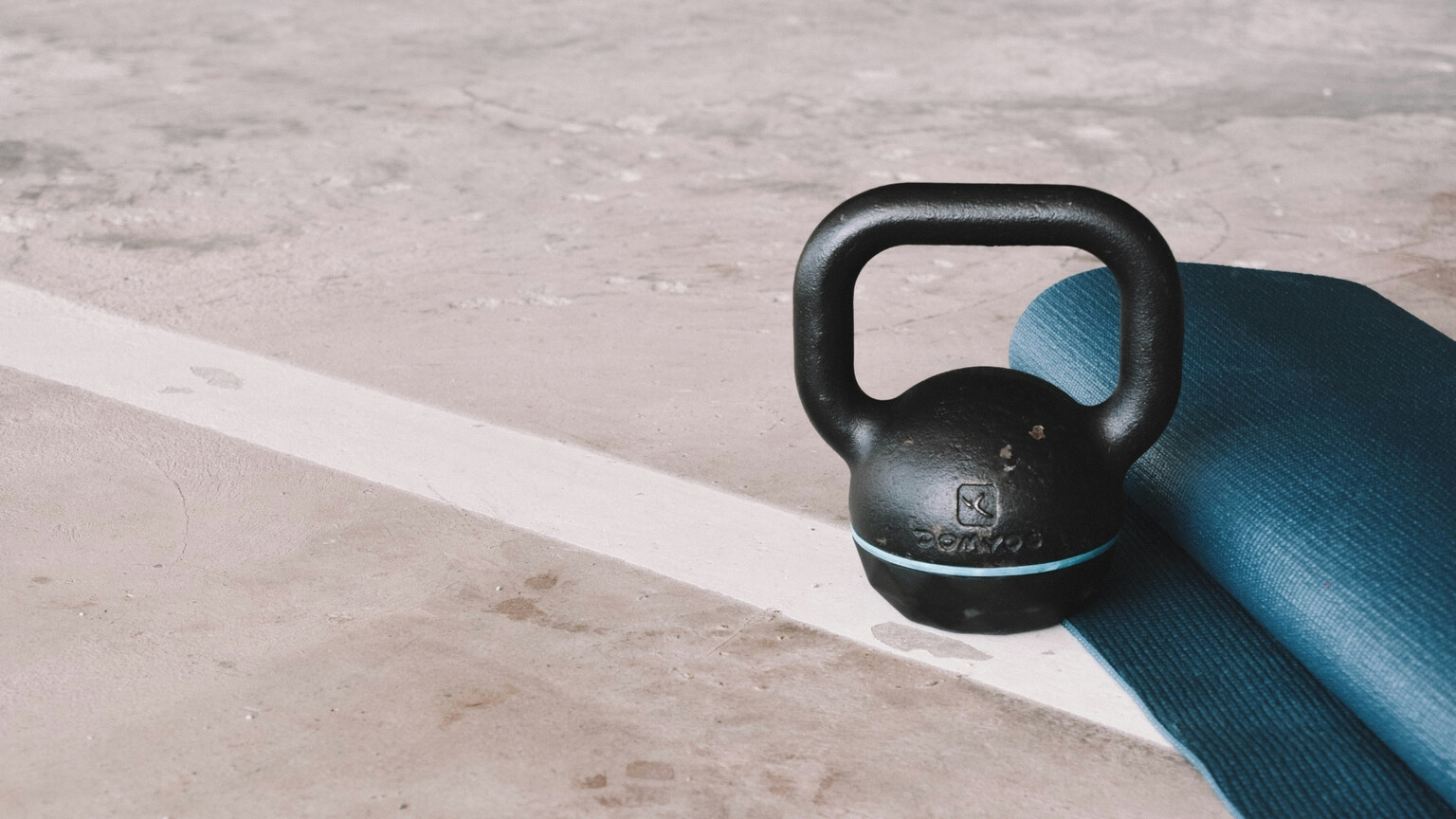
This seated kettlebell drill turns three controlled movements into a demanding test of core stability. Shared by strength coach Iestyn Williams on Instagram, the Iron Trident requires you to move a kettlebell between three points while keeping your torso upright. The challenge comes from preventing the weight from pulling your body out of position.
How to perform the Iron Trident
Sit with your legs straight and spread into a V-shape. Hold the kettlebell by its handle with an overhand grip, then brace your stomach and glutes while keeping your chest lifted.
Move the kettlebell beside your right hip and place it down fully. Lift it again, carry it between your legs and pause before moving it to the outside of your left hip.
Those three touches count as one repetition. Perform each stage slowly, placing the kettlebell on the floor before moving it to the next position.
The exercise should not become a fast twisting motion. Your torso needs to remain steady while your arms guide the weight around your body.
Why it challenges more than your abs
Williams says the Iron Trident trains the core to resist rotation and extension under load. This reflects the stabilising role the core plays during strength training, sport and everyday movement.
As the kettlebell travels between the three positions, the abs, obliques and deeper core muscles work to keep the spine and torso steady. The upright seated posture also challenges the upper back, shoulders and grip.
Moving slowly keeps the muscles under tension for longer, so there is no need to reach for the heaviest kettlebell available. Choose a weight you can control without leaning, collapsing or relying on momentum.
Keep your chest lifted without arching the lower back. If your torso twists excessively or the kettlebell becomes difficult to place under control, switch to a lighter weight to maintain form.
The Iron Trident requires only one kettlebell and enough floor space to sit comfortably. It may look simple, but a few slow repetitions reveal how demanding it becomes when the torso stays firmly in position throughout.