
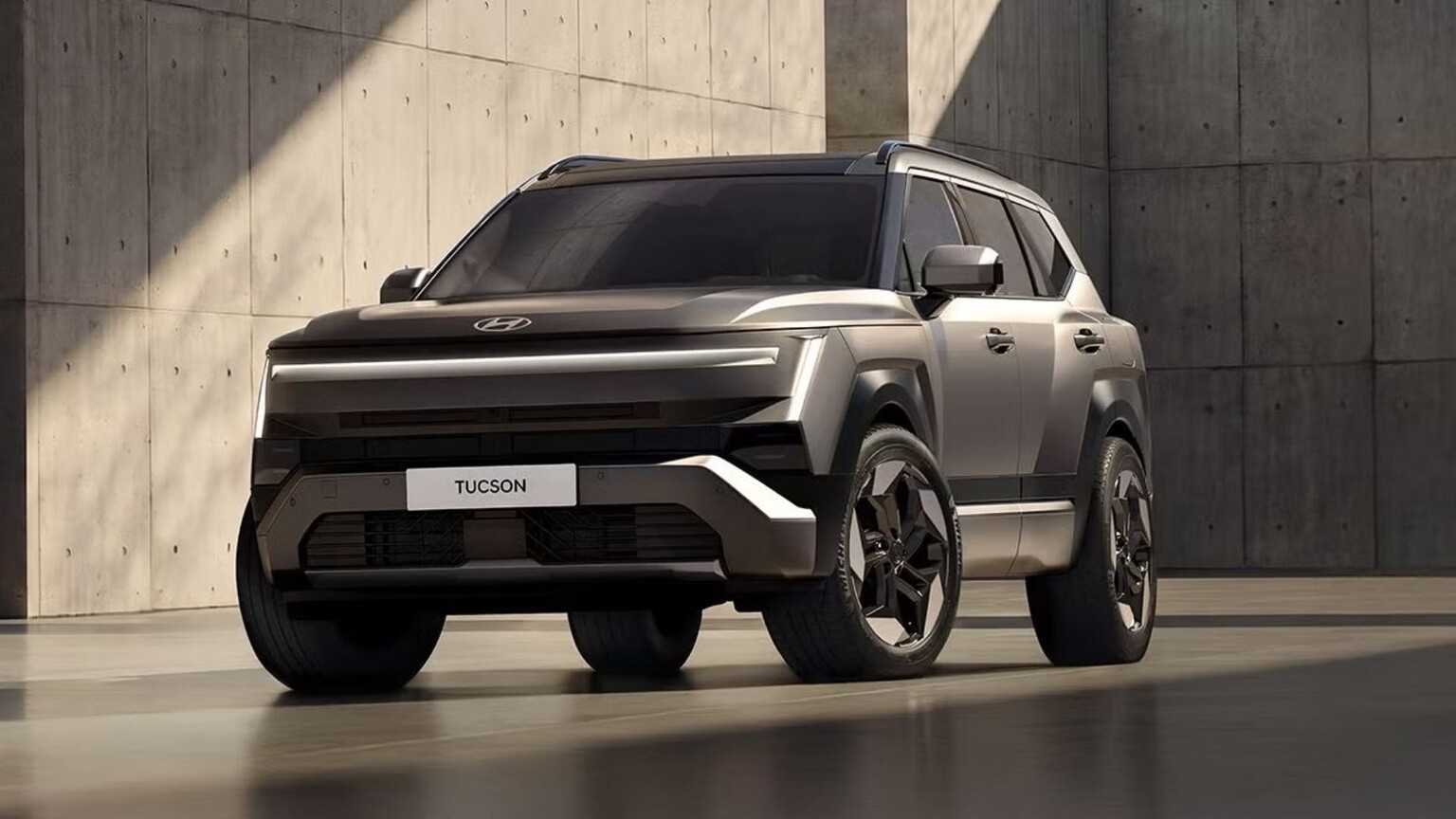
Hyundai has completely reinvented the Tucson for its fifth generation, giving the family SUV a much boxier and tougher look than the model it replaces.
The new 2027 Tucson was revealed in Korea ahead of its wider rollout, bringing Hyundai’s latest Art of Steel design language to one of its best-known SUVs. Hyundai has also confirmed that an all-new Tucson forms part of its 2026 product rollout.
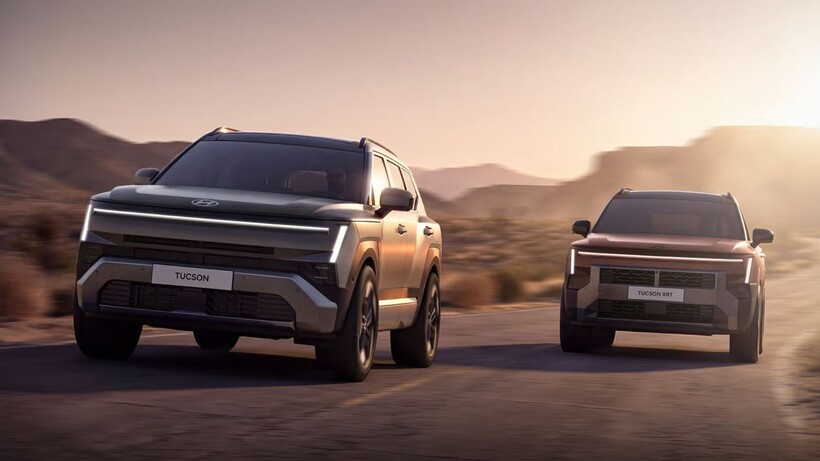
Instead of the flowing bodywork seen on the current car, the replacement adopts a more upright, two-box shape with heavily sculpted wheel arches and chunky lower cladding. All of those changes give it a much stronger off-road influence.
The lighting adds to that tougher character, with a slim light bar wrapping around the front and meeting vertical daytime-running lights to create an H-shaped signature. A similar motif can be seen at the rear, while a prominent skid plate adds another rugged detail underneath.
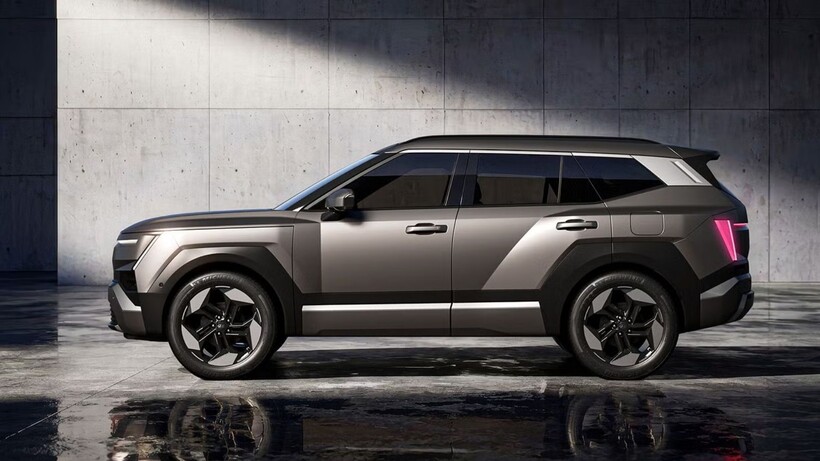
The redesign also brings a noticeable increase in size. It now measures 4,700mm long with a 2,785mm wheelbase, and the extra width helps free up more space inside. Second-row passengers gain another 29mm of headroom, while wider-opening rear doors should make getting in and out easier.
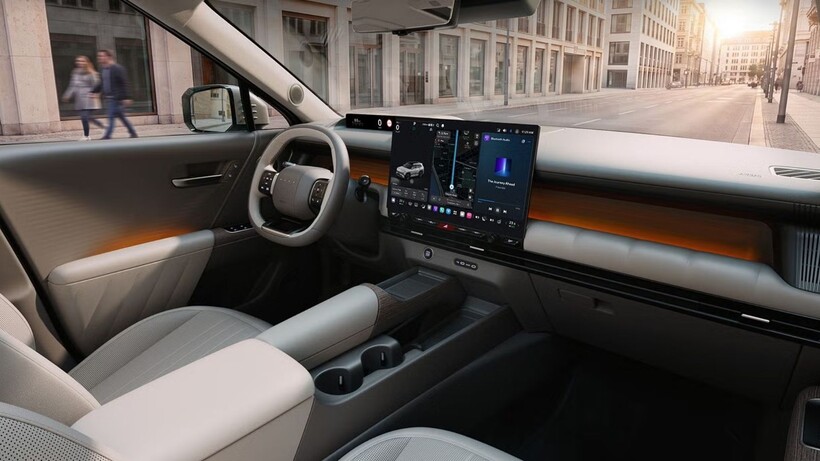
Inside, Hyundai has gone for a simpler and more minimal layout. A large central touchscreen dominates the dashboard, joined by a slim digital display positioned above a newly squared-off steering wheel.
Hyundai is still keeping one major detail under wraps, with the new Tucson’s engine range yet to be revealed. That leaves some uncertainty over how closely it will follow the current mix of petrol, mild-hybrid, full-hybrid and plug-in-hybrid powertrains.
Whatever ends up under the bonnet, the design already makes this a very different Tucson. The sharp, flowing look of the current model has given way to something chunkier, squarer and far more imposing